01 / CAPTURE
Solar.
Turn daylight into electricity for your home. Panel placement and system size begin with your roof, shading and power use.
Explore solar Plan your system
AOTEAROA · SOLAR & BATTERY
Solar, battery storage and smart energy.
Designed around your home.
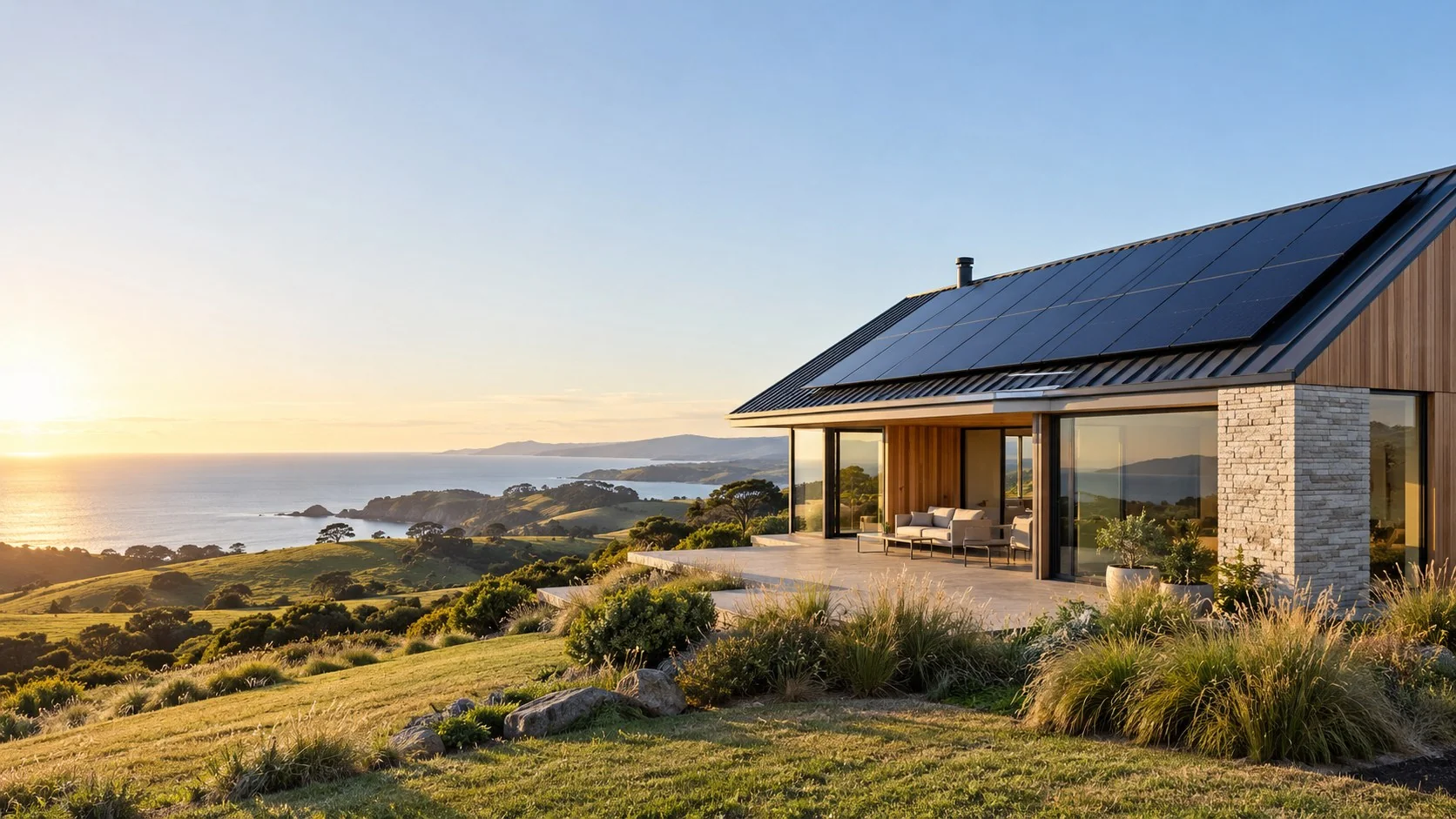
KĀINGA · HOME
Generate power on your roof. Store some for later. Understand where it goes. We bring the pieces together so your energy system fits the way you live.
THREE PARTS. ONE PLAN.
Start with what you need today.
Plan for what comes next.
Turn daylight into electricity for your home. Panel placement and system size begin with your roof, shading and power use.
Explore solarKeep surplus solar energy for later. Choose capacity around your evening use and the role you want storage to play.
Explore storageSee how power moves between your roof, battery, home and grid. Compatible controls help you manage your system.
Explore controlENERGY THROUGH YOUR DAY
See how solar and storage can work together. Your actual energy flow depends on sunlight, demand, system settings and battery charge.
USE THE SUN
Solar can supply your household loads while available surplus charges a compatible battery. Remaining surplus may be exported to the grid under your electricity plan.
THE DE ENERGY APPROACH
Based in Wellington, DE Energy brings a practical design approach to solar and battery systems. We start with your property and priorities, then work towards a system that makes sense for you.
Your location, electricity use and goals give us a useful starting point.
Roof layout, shading, electrical setup and battery location inform the design.
Understand the equipment, scope, assumptions and pricing before deciding.
Confirm installation arrangements, connection requirements and your system handover.
CASE STUDIES
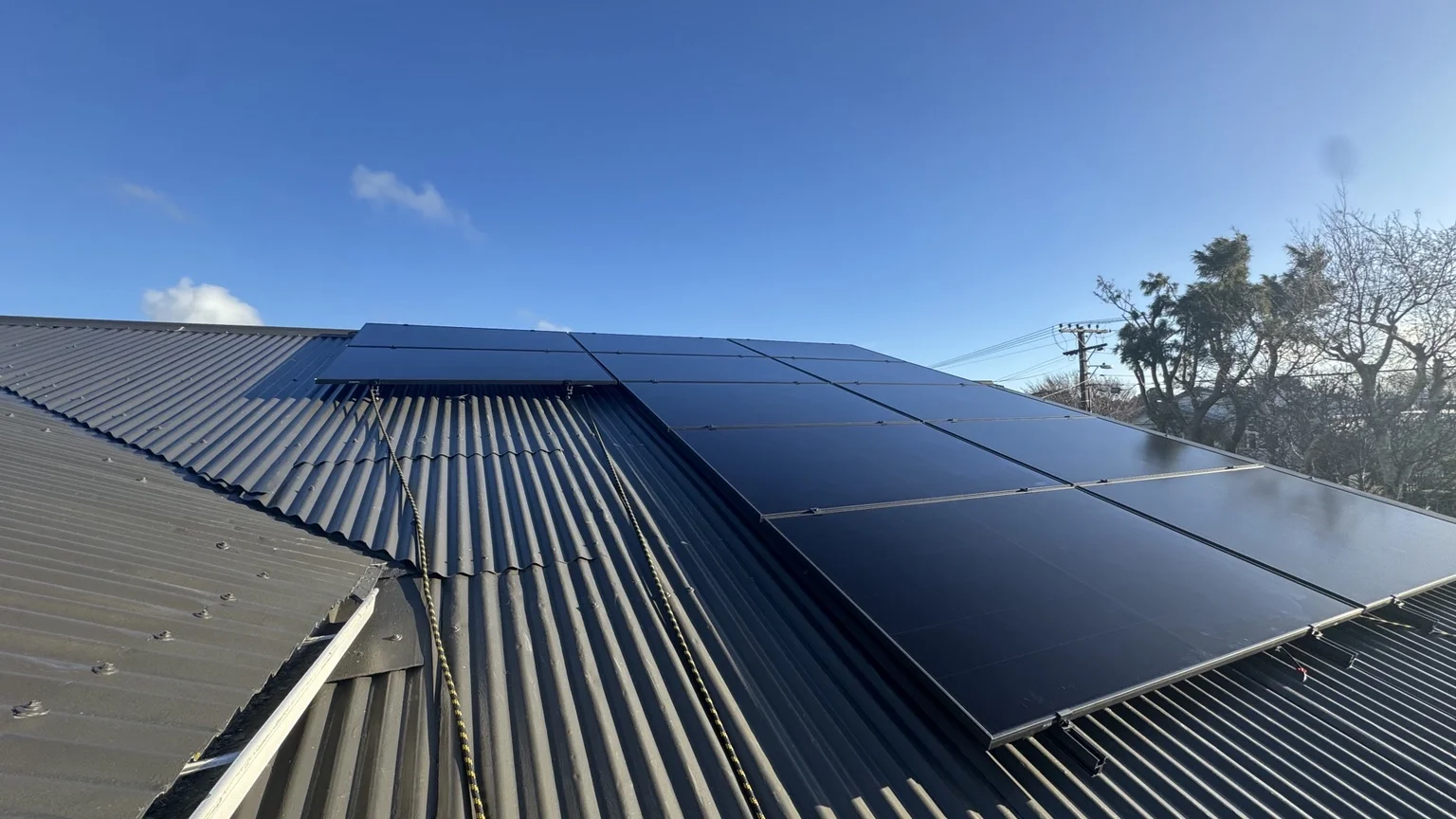
A Lower Hutt home with 12 all-black solar panels, 18 kWh of battery storage and backup for power cuts. See the installation, from roof preparation to the finished system.
View the Hutt projectA FEW GOOD QUESTIONS
No. Solar can work without storage. A battery can shift surplus daytime generation to later use; its value depends on your consumption, tariffs and installed cost.
Ordinary grid-connected solar shuts down during an outage. Backup requires a suitable system with compatible equipment and a configured backup arrangement. Supported circuits and run time depend on the design, loads and available battery charge.
Savings depend on your roof, local conditions, electricity rates and when you use power. A useful proposal should explain its assumptions rather than promise a fixed result.
It may be possible, but compatibility and installation requirements matter. Tell us if future storage is part of your plan so we can consider it from the beginning.
Check the installer’s workmanship warranty separately from the manufacturer warranties for panels, the inverter and any battery. EECA currently suggests minimum cover of 5 years for workmanship, 10 years for lithium-ion batteries and panel products, 5 years for string inverters and 10 years for microinverters. Confirm who provides each warranty, what it covers and any exclusions in the written proposal. These are comparison guidelines—not DE Energy warranty terms. Read EECA’s guide.
EECA has practical guidance on planning home solar and costs and savings.
KIA ORA · HELLO
Share the essentials that shape a solar and battery design. You can save the finished brief and use it when you are ready to talk.
You choose what to share. This tool prepares your brief on this device. It does not upload, store or send your details. Opening an email creates a draft in your email app; you review it and choose whether to send.